How Green Gas Is Priced, and How Purely Green Works

Written by
Harvey Rowlinson
Founder and Director, Purely Energy
Reviewed by
Harvey Rowlinson
Founder and Director, Purely Energy
5 min read
Green gas is now on our quotes. Find out how it is priced, what you are really paying for, and how Purely Green works for your business.
More and more of our customers are asking for a greener gas contract. Usually a customer, a tender or their own net zero plan has asked them to show progress. Gas is harder to make green than electricity, though, and the word "green" on a gas tariff can mean very different things from one supplier to the next.
Since 4 November 2026, Ecotricity's business gas prices sit alongside our other suppliers when we quote. So we have put together a guide to what sits behind a green gas price, and how we help you buy one knowing exactly what you are getting.
What is green gas?
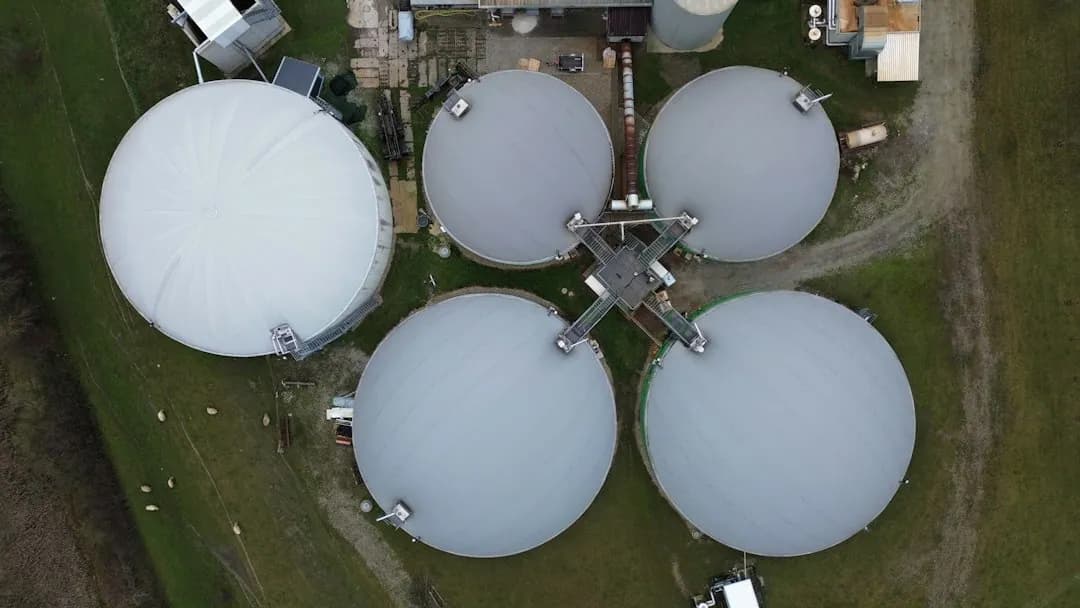
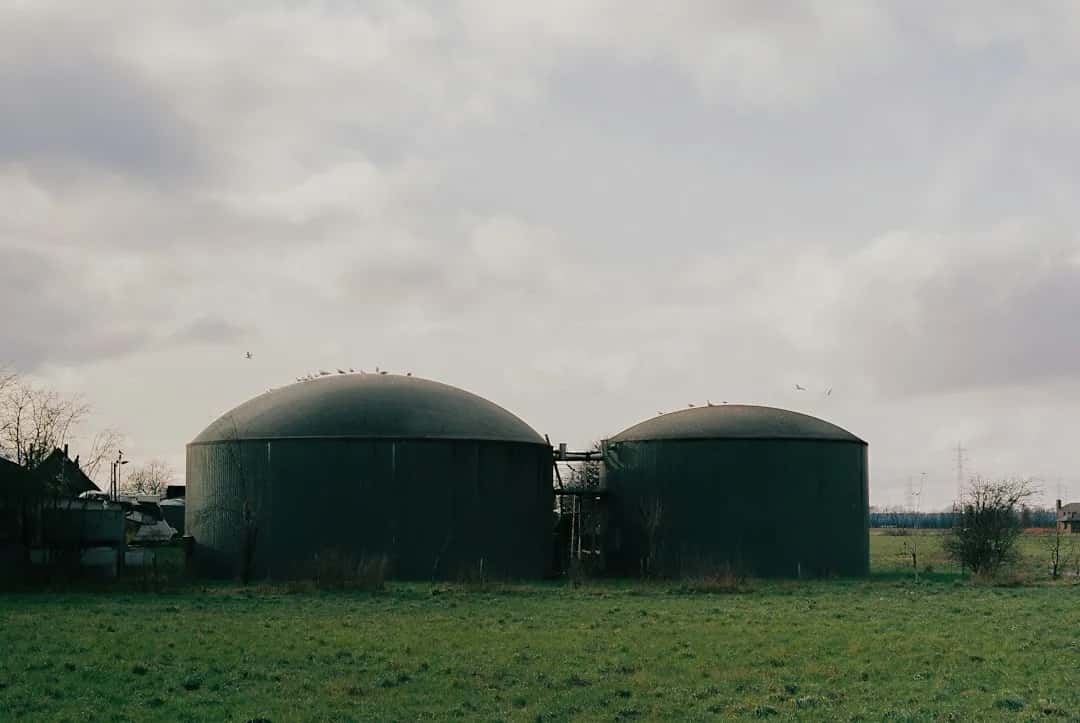
Green gas is gas made from organic material rather than drilled out of the ground. Crops, grass, manure, food waste and sewage are broken down by bacteria in a sealed tank, a process called anaerobic digestion, which gives off biogas. That biogas is cleaned up into biomethane, which is chemically the same as natural gas, and injected into the gas grid.

Once it is in the grid, biomethane mixes with natural gas in the pipes. There is no separate green pipe to your premises, so the gas you burn is the same gas your neighbour burns. What you buy on a green tariff is a claim on a share of the green gas that was injected, and that claim is backed by certificates.
In the UK those certificates are called Renewable Gas Guarantees of Origin, or RGGOs. They are issued by the Green Gas Certification Scheme, run by Renewable Energy Assurance Ltd, at one certificate for every kWh of biomethane injected. When a supplier sells you green gas, it should cancel the matching certificates against your supply.
It's worth clearing up a common misconception here. Ofgem issues certificates for renewable electricity, called REGOs, but it does not issue certificates for gas. If a supplier tells you its green gas is backed by Ofgem certificates, ask which scheme it actually uses.
How is green gas priced?
A green gas price is built the same way as any other business gas price, with a premium for the green part on top.
The starting point is the wholesale cost of gas, which moves every day with the market. On top of that sit the costs every gas meter carries: network charges, metering, the supplier's own costs and margin, and government charges.

Two of those government charges are worth knowing about. The Green Gas Levy is 1.046p per meter per day from 1 April 2026 to 31 March 2027, about £3.82 a year for each meter. Gas suppliers pay it for every meter they supply, green tariff or not, and it funds the Green Gas Support Scheme, which pays new anaerobic digestion plants for the biomethane they inject. The Climate Change Levy is charged on green gas in exactly the same way as fossil gas, at 0.801p per kWh from 1 April 2026 and 0.827p from 1 April 2027. There is no CCL relief for biomethane.
The green part of the price depends on how the supplier makes its claim. Biomethane certificates are traded separately from the gas itself. The most recent public benchmark we could find puts what producers receive for them at about £7 per MWh, roughly 0.7p per kWh (Baringa for the Green Gas Taskforce, October 2025). Live certificate prices are published by Argus and Platts, but only to paying subscribers. Where a supplier offsets the rest of its gas through carbon reduction projects, the cost of those offsets is built in too, and suppliers rarely publish it.
In simpler terms, a tariff matched to 100% certified biomethane will usually carry a much bigger premium than one that is mostly natural gas with offsetting. Two "green" prices can look very different for good reason.
To show what this looks like in practice, we priced a business gas meter using 16,145 kWh a year on 4 November 2026, with a 1 December start and the same commission on every supplier. Ecotricity's 24-month price was 9.27p per kWh plus 78.15p a day, about £1,871 a year. The cheapest standard 24-month fix was 7.49p per kWh plus 77.74p a day, about £1,568 a year. That is around £300 a year more for Ecotricity's carbon neutralised gas. Suppliers don't split out how much of a gap like that is the green element and how much is their normal pricing, which is why we always show you both prices side by side.

What does green gas mean for your carbon reporting?
Green gas can strengthen your carbon reporting, but it does not make your gas emissions disappear on paper, and it is worth knowing why before you buy.
Under SECR, the government's reporting guidance asks for what it calls dual reporting. You report your gas emissions using the standard grid figure, and you can then show a second, market-based figure that reflects the green gas you have bought. In the government's 2026 conversion factors, grid natural gas is 0.18231 kg of CO2e per kWh, and the guidance says anyone reporting natural gas use should use that factor for the standard figure.
The GHG Protocol, the international standard most companies follow, says there is no definitive guidance yet on how biomethane certificates should be counted. Until there is, the safe approach is to report the standard figure, show a market-based figure alongside it with your certificates as evidence, and explain your method.
In simpler terms, keep your certificates and supplier statements, report both numbers, and be open about how you got there. If you report to a customer, a lender or a tender panel, it is worth asking which figure they want to see and how they treat carbon offsets.
What green gas can we offer?
The two suppliers we use for green gas take quite different approaches, so the right one depends on how much of your gas you need to be biomethane.
Ecotricity's business gas is about 1% biomethane, with the rest offset through carbon reduction schemes. Its prices now come through our system straight away for 12 and 24 month fixes, including on our online quote.
Crown Gas & Power lets you choose how much of your gas is biomethane. Its green gas range runs from Bio10, which is 10% biomethane, through Bio25 and Bio50 to Bio100, which is 100% biomethane. On the blends, the natural gas part is offset through Gold Standard or Verified Carbon Standard schemes. Crown says all of its biomethane is produced in the UK and traded as RGGO certificates through the Green Gas Certification Scheme, and it sends you certificates to display at your premises, aiming to do so within three weeks of your supply going live. Crown prices green gas on request, so we ask for it alongside your other quotes.

In simpler terms, the more biomethane you choose, the more you will pay, and the stronger your green gas claim will be.
How does Purely Green work for you?
Purely Green is how we help you buy greener energy without paying for a label you can't back up. For gas, it works in four steps.
- We quote green and standard tariffs side by side, so you can see the premium in pounds before you decide.
- We ask the supplier, in writing, exactly what sits behind the green claim: how much of the gas is certified biomethane, which certificate scheme backs it, and how the rest is offset.
- Once you sign, we ask the supplier for the paperwork, such as a certificate cancellation statement or an offsetting statement, so you have it ready for SECR, a tender or a customer questionnaire.
- We keep track of your end date and requote before your renewal, so a green contract never drifts onto out-of-contract rates.
For electricity, the evidence is simpler. Renewable electricity is backed by REGO certificates, issued by Ofgem at one per MWh, which a supplier matches to your supply on a renewable tariff.
What do people get wrong about green gas?
The biggest misunderstanding is that a green gas tariff means all of your gas is green. Some tariffs are fully matched with certified biomethane, while others contain a small share of biomethane and offset the rest. Ecotricity, for example, says about 1% of the gas it supplies to businesses comes from green gas mills, and the rest is natural gas that it offsets through carbon reduction schemes.
The second is that green gas is free of the Climate Change Levy. It isn't. CCL is charged on gas supplied through the gas network whatever its source, so a green tariff pays the same CCL as any other.
The third is that a green tariff avoids the Green Gas Levy. A supplier can only be exempt if it can show it supplied at least 95% biomethane through the approved certification scheme, so most green tariffs still carry it.
Before you sign any green gas contract, these are the questions we would ask:
- What share of my gas is matched to certified biomethane?
- Which certificate scheme backs it, and will you cancel the certificates against my supply?
- How is the rest offset, which projects, and to what standard?
- What evidence will I receive, and when?
- How much more am I paying than for your standard tariff?
How Can Purely Energy Help?
If you would like to see what green gas would cost your business, we can price it alongside standard tariffs from across our panel of suppliers, and explain exactly what each green claim is backed by before you commit.
If you have questions about green gas or want help lowering your energy costs, contact us at 0161 521 3400 or info@purelyenergy.co.uk. Alternatively, you can get a quick quote.
© 2026 Purely Energy Ltd. Terms of use.
How we produced this article
This article was AI-drafted and human-reviewed by Harvey Rowlinson on 4 November 2026 and reviewed by Harvey Rowlinson, Founder and Director, Purely Energy on 4 November 2026. It is scheduled for its next review on 4 November 2027.
Sources
- Certificates, Green Gas Certification Scheme (accessed 4 November 2026)
- Renewable Energy Guarantees of Origin (REGO), Ofgem (accessed 4 November 2026)
- Green Gas Levy rates for the 2026 to 2027 financial year, GOV.UK (accessed 4 November 2026)
- Exemptions from the Green Gas Levy: approved biomethane certification schemes, GOV.UK (accessed 4 November 2026)
- Green Gas Support Scheme and Green Gas Levy, Ofgem (accessed 4 November 2026)
- Climate Change Levy rates, GOV.UK (accessed 4 November 2026)
- Biomethane study, October 2025, Green Gas Taskforce (accessed 4 November 2026)
- Environmental Reporting Guidelines including SECR, GOV.UK (accessed 4 November 2026)
- Greenhouse gas reporting: conversion factors 2026, GOV.UK (accessed 4 November 2026)
- Interim update on accounting for biomethane certificates, GHG Protocol (accessed 4 November 2026)
- Business energy FAQs, Ecotricity (accessed 4 November 2026)
- Green gas for businesses, Crown Gas & Power (accessed 4 November 2026)
Read our editorial standards and corrections policy.