Where Does Ecotricity's Gas Come From?

Written by
Harvey Rowlinson
Founder and Director, Purely Energy
Reviewed by
Harvey Rowlinson
Founder and Director, Purely Energy
5 min read
Ecotricity's business gas is now on our quotes. Find out what is actually in it, where the green part comes from, and what it does for your business.
When a business picks Ecotricity, it is usually because of the name. Ecotricity has been selling green gas since 2009, and its electricity is 100% renewable. Its gas works quite differently from its electricity, though, and if you are choosing it for your carbon reporting or a customer's questionnaire, it pays to know exactly what you are buying.
We have looked into it in detail, so you don't have to.
What is in Ecotricity's gas?
Ecotricity describes its business gas as "carbon neutralised gas". On its business FAQs it says about 1% of the gas it supplies to businesses comes from green gas mills, and the rest is natural gas that is offset by investing in carbon reduction schemes around the world.
In simpler terms, around one unit in every hundred is matched to biomethane, and the other ninety-nine are ordinary grid gas with offsetting on top.

That share has changed over the years. When Ecotricity launched green gas in 2009, it described it as a mix of green and conventional sources. In 2010 it began adding biogas made from sugar beet in Holland, with a target of up to 10% by the end of that year. By 2016 an Advertising Standards Authority ruling recorded the mix as 5% sugar beet gas and 95% fossil gas.

The offsetting is also changing. In November 2025, Ecotricity announced it was ending offsetting through carbon credits for its household gas, moving instead to UK rewilding and enhanced rock weathering projects built by its sister company, Carbon Bank. Its business pages still describe international carbon reduction schemes, so if you need to know which projects sit behind your gas, it is worth asking Ecotricity to confirm it in writing. We can do that for you.
Where is the green gas made?
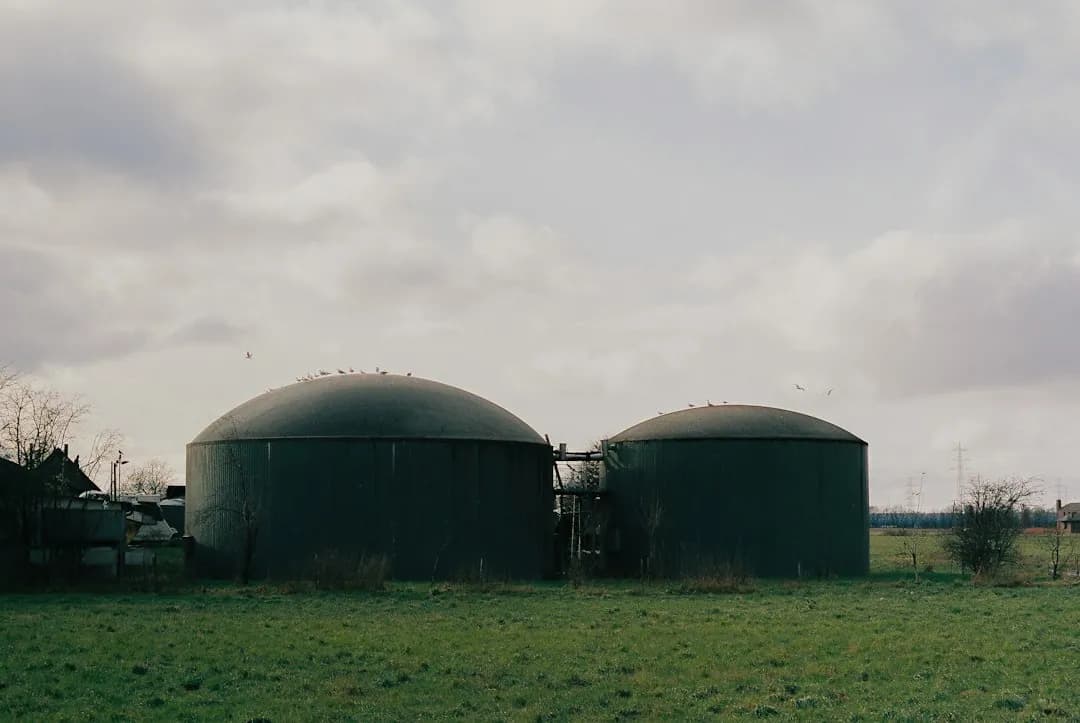
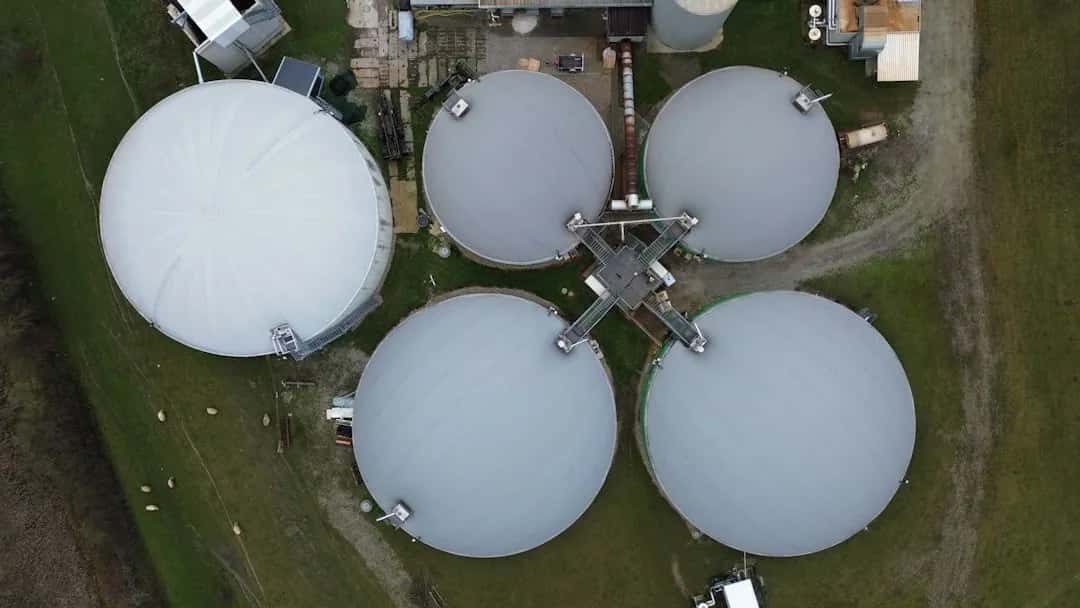
Today, the green part of Ecotricity's gas comes from other people's plants. Its business FAQs say it comes from "other green gasmills", which means anaerobic digestion plants elsewhere in the country that inject biomethane into the grid. There are around 130 of these plants in Great Britain, and in 2025 certificates were issued for 3,421 GWh of biomethane injected into the grid, more than half of it made from wastes and residues (Green Gas Certification Scheme annual report 2025). Ecotricity doesn't say which plants it buys from, so if that matters to you, ask.
Ecotricity's long-term plan is to make its own green gas from grass. It calls these plants green gas mills: grass and other crops are grown, harvested and digested to make biomethane, with no animal products involved.
Its first mill, in Reading, was built in 2023. According to reports of its accounts for the year to April 2024, it was written down by £12.2 million because design problems meant it could not run as intended. In January 2025, Dale Vince said it had been shut down pending a rebuild using a blend of grass and other crops. Ecotricity's website now says it is refining the technology, and we have found nothing confirming the Reading mill is supplying gas in 2026.
An earlier mill at Sparsholt in Hampshire won planning permission in 2016 but was never built, and the company set up for it is listed as dormant in the group's latest accounts.
How does it reach your meter?
Your gas comes through the same pipes whichever supplier you choose. Biomethane from an anaerobic digestion plant is injected into the grid, where it mixes with natural gas, and what comes out at your meter is that mix.
The green claim is made on paper. For every kWh of biomethane injected, the Green Gas Certification Scheme issues a Renewable Gas Guarantee of Origin. A supplier buys these certificates and cancels them against the gas its customers use. The scheme itself says the certificates do not track the physical flow of gas, which is why the certificate, not the pipe, is what backs the claim.

It's worth clearing up a common misconception here. No supplier can send you a separate stream of green gas. Choosing Ecotricity changes who pays for the biomethane and the offsetting, not the gas that reaches your boiler.
What does it actually do?
The biomethane part of Ecotricity's gas replaces fossil gas in the grid. Biomethane is made from plants and waste that grew recently, so the carbon it releases when burnt was taken out of the air not long before. The government's 2026 conversion factors reflect this: burning biomethane counts as almost nothing in Scope 1, while grid natural gas counts as 0.18231 kg of CO2e for every kWh.
The other 99% is ordinary natural gas, and its emissions are balanced by the carbon reduction projects Ecotricity pays for. Ecotricity's gas has also been registered with the Vegan Society since 2018, which means the material behind its green gas contains no animal by-products.
For your carbon reporting, this means three things:
- Your standard SECR figure for Ecotricity gas uses the same grid natural gas factor as any other supplier.
- You can show the green share and the offsetting alongside it, as a second figure, with Ecotricity's statement as your evidence.
- If you report to a customer, a lender or a tender panel, ask how they treat carbon offsets, because the offsetting is doing most of the work in "carbon neutralised".
Who are Ecotricity, and what should you check before signing?
Ecotricity Ltd is part of Green Britain Group, which is controlled by Dale Vince (Companies House). The group's accounts for the year to 30 April 2025, filed in February 2026, show 188,000 meter points on supply, revenue of £551.9 million and a pre-tax profit of £10.3 million at Ecotricity Ltd. The group runs 74 wind turbines across 22 wind parks and three solar parks, about 105 MW in total.
Before you sign, a few things are worth knowing:
- Contract length: Ecotricity's business gas prices run for 12 or 24 months, so there is no three-year fix.
- Start date: your contract can start up to 90 days ahead.
- Payment: Direct Debit only.
- Standing charge: there is no zero standing charge option.
- Evidence: ask for the green gas share and the offsetting projects in writing, so you have them for your reporting.
It is also worth comparing the price with a standard tariff. When we priced a business gas meter using 16,145 kWh a year on 4 November 2026, Ecotricity's 24-month price came to about £300 a year more than the cheapest standard fix. Whether that is worth it depends on how much the green claim matters to your customers and your reporting.
If you need more of your gas to be biomethane than Ecotricity offers, Crown Gas & Power is the other supplier we use for green gas. Its green gas range lets you choose 10%, 25%, 50% or 100% biomethane, with the natural gas part of the blends offset through Gold Standard or Verified Carbon Standard schemes, and it sends you RGGO certificates to display at your premises.

How Can Purely Energy Help?
If you are thinking about Ecotricity for your gas, we can show you its price next to standard tariffs from across our panel of suppliers, and get the green gas share and offsetting details from Ecotricity in writing before you sign.
If you have questions about green gas or want help lowering your energy costs, contact us at 0161 521 3400 or info@purelyenergy.co.uk. Alternatively, you can get a quick quote.
© 2026 Purely Energy Ltd. Terms of use.
How we produced this article
This article was human-written by Harvey Rowlinson on 4 November 2026 and reviewed by Harvey Rowlinson, Founder and Director, Purely Energy on 4 November 2026. It is scheduled for its next review on 4 November 2027.
Sources
- Business energy FAQs, Ecotricity (accessed 4 November 2026)
- Our fuel mix, Ecotricity (accessed 4 November 2026)
- Green gas from Ecotricity is go, Ecotricity (accessed 4 November 2026)
- Ecotricity customers cooking on UK's first green gas, Ecotricity (accessed 4 November 2026)
- ASA ruling on Ecotricity Group Ltd, Advertising Standards Authority (accessed 4 November 2026)
- We're changing the way we offset our gas, Ecotricity (accessed 4 November 2026)
- An update on our green projects, Ecotricity (accessed 4 November 2026)
- Ecotricity's first vegan gas mill worth scrap value, ENDS Waste & Bioenergy (accessed 4 November 2026)
- Ecotricity boss rubbishes claims of trouble at the gas mill, Punchline Gloucester (accessed 4 November 2026)
- Certificates, Green Gas Certification Scheme (accessed 4 November 2026)
- GGCS Annual Report 2025, Green Gas Certification Scheme (accessed 4 November 2026)
- Ecotricity's gas receives Vegan Society registration, Ecotricity (accessed 4 November 2026)
- Greenhouse gas reporting: conversion factors 2026, GOV.UK (accessed 4 November 2026)
- Green Britain Group Ltd: persons with significant control, Companies House (accessed 4 November 2026)
- Green gas for businesses, Crown Gas & Power (accessed 4 November 2026)
Read our editorial standards and corrections policy.